TMJD: The Anatomy Behind Jaw Pain and How Active Release Technique Helps
Jaw pain, clicking when you open wide, headaches around the temples, a jaw that feels tired after a meal. These are common reasons people search for TMJ treatment, and they often have more to do with muscles than most people expect. Understanding the anatomy makes it clear why soft tissue work can help.
The anatomy of the jaw
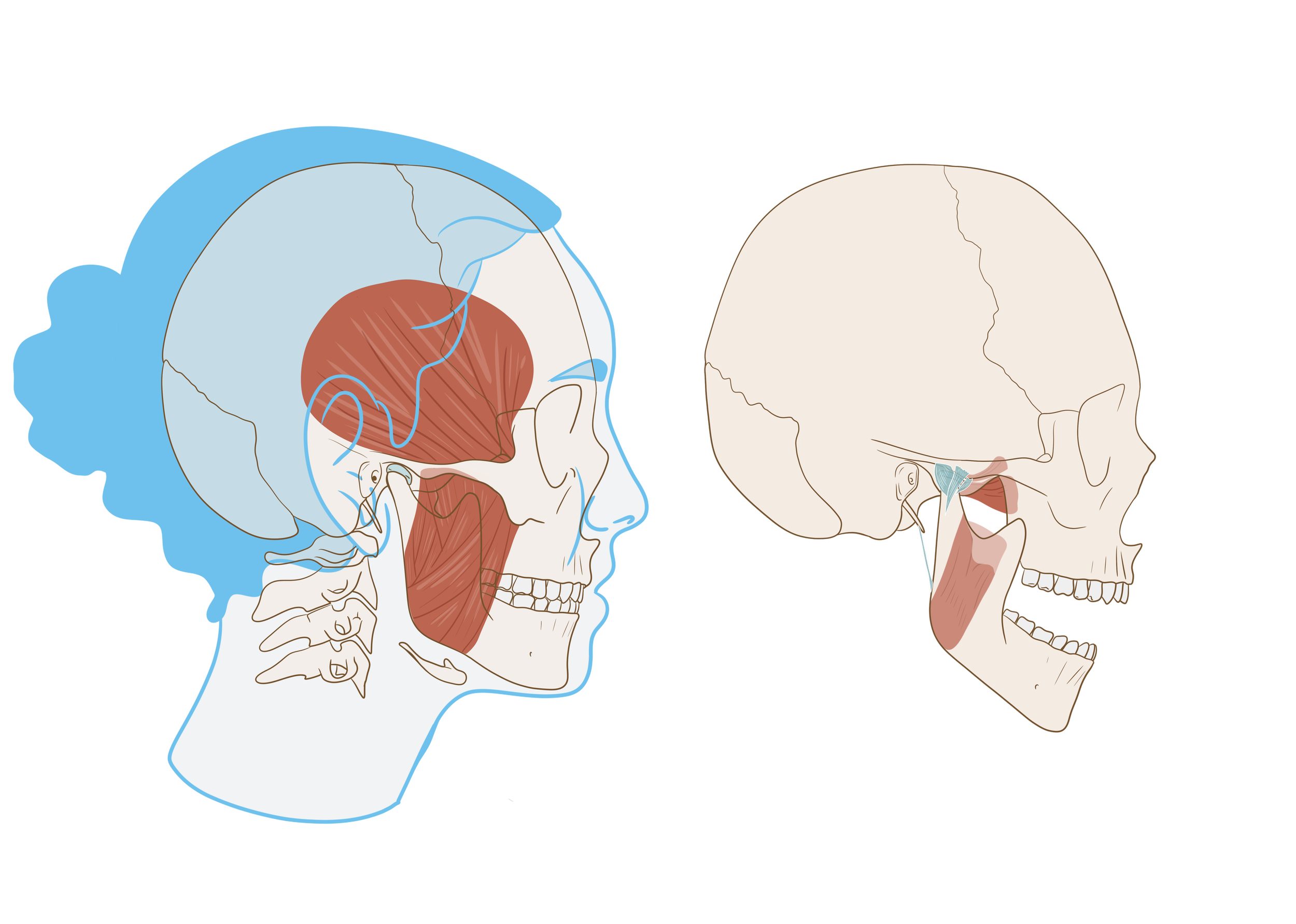
The temporomandibular joint (TMJ) connects your lower jaw (mandible) to the temporal bone of your skull, just in front of each ear. A small cartilage disc sits between the two surfaces and lets the joint both hinge and glide, which is how you open, close, and shift your jaw side to side.
The joint itself is small. The muscles that move it are strong and do a lot of work. Four main muscles handle chewing:
The masseter is the thick muscle along the side of your cheek and jaw angle. It is one of the strongest muscles in the body for its size and does most of the biting force.
The temporalis is the fan-shaped muscle across the side of your head, above the ear. It closes the jaw, and it is a common source of temple headaches when it gets overworked.
The medial pterygoid sits on the inside of the jaw angle and works with the masseter to close the jaw.
The lateral pterygoid sits deep, behind the cheekbone, and attaches directly to the joint disc. It opens the jaw and guides side-to-side movement, which is why it has a big influence on clicking and joint tracking.
TMJD (temporomandibular joint disorder, sometimes called TMD) is the umbrella term for pain and dysfunction in the joint, the chewing muscles, or both.
Art By SandySpines.com
What causes TMJD
TMJD rarely has a single cause. Research describes it as multifactorial, a mix of physical, behavioral, and emotional factors. Common contributors include:
Clenching and grinding. Daytime clenching and nighttime grinding (bruxism) keep the chewing muscles under load for hours. Clenching in particular appears to be more strongly linked to jaw pain than grinding alone.
Stress. Many people hold tension in the jaw without noticing, and stress is associated with jaw tightness and reduced mouth opening.
Prior trauma. A blow to the jaw, whiplash, or a dental procedure that required a long time with the mouth open can irritate the joint and surrounding muscles.
Disc displacement. When the disc inside the joint slips out of position, it can cause clicking, catching, or locking, and a history of this is among the strongest risk factors for TMJD.
Posture. A forward head position changes the resting position of the jaw and puts extra load on the muscles around the neck and jaw.
Chewing habits and dental factors. Chewing mostly on one side, gum chewing, and ill-fitting night guards or dental work can all change how load distributes through the jaw.
Why soft tissue treatment makes sense
Because the chewing muscles are involved in most TMJD cases, treating them is often a sensible first step. Overworked muscles develop tight bands, adhesions, and trigger points. They pull on the joint, restrict how far your mouth opens, and refer pain into the temples, ear, and neck.
Manual therapy has reasonable support in the research. A review of 15 randomized trials found myofascial manual therapy significantly reduced pain compared with control groups. Results are more mixed for mouth opening and for how long gains last, which is why we pair treatment with habit changes and a home program.
How Active Release Technique treats TMJD
Active Release Technique (ART) is a hands-on method where we apply tension to a specific muscle while you move the jaw through its range of motion. That helps break up adhesions, restore normal glide between muscle layers, and reduce tension in the tissue.
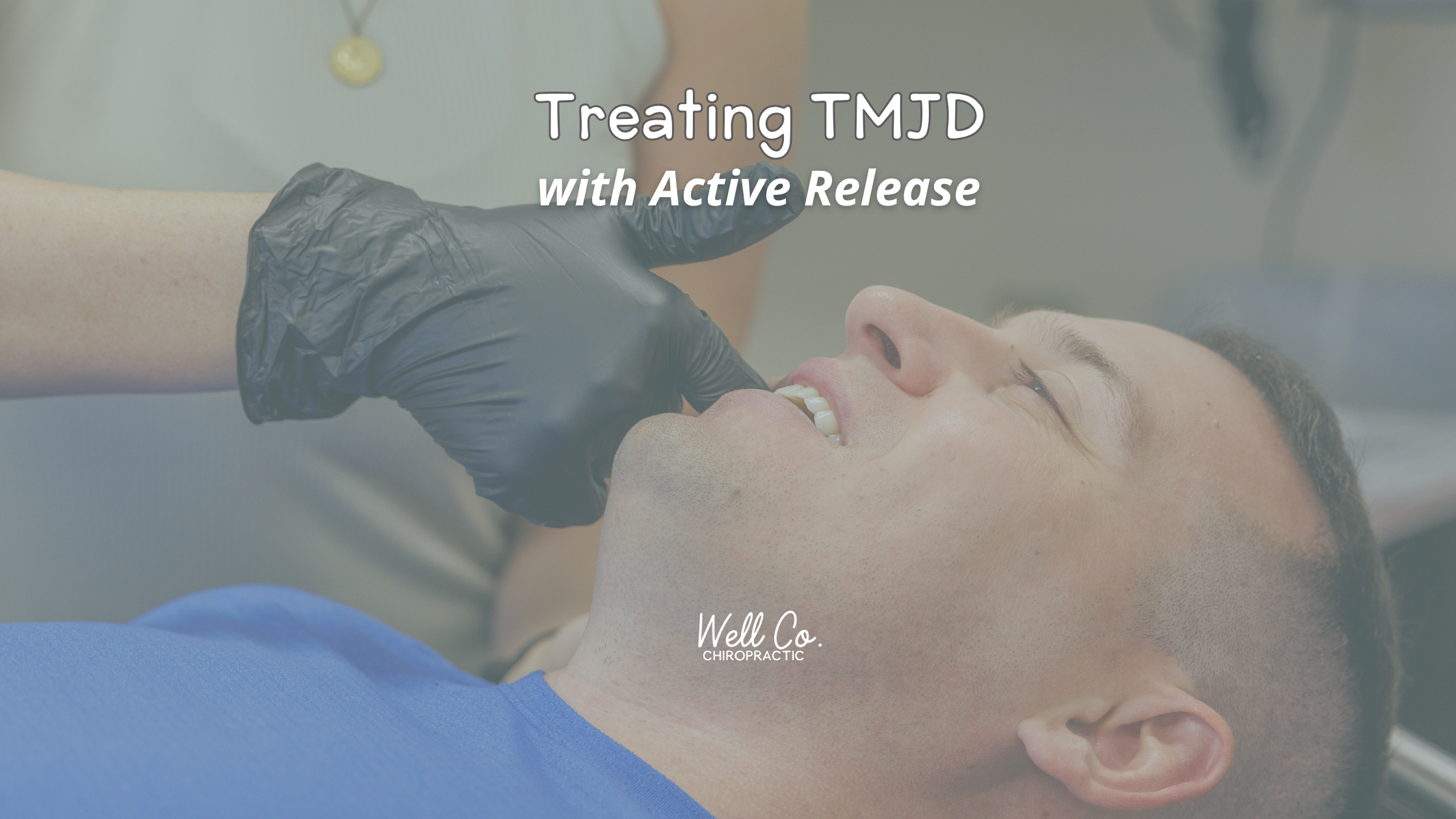
For TMJD, we work through the muscles above one at a time. Treatment can include the masseter and temporalis from the outside, the medial and lateral pterygoids where appropriate with a glove on the inside of the jaw, and the neck and upper back muscles that share load with the jaw, including the suboccipitals, upper trapezius, and sternocleidomastoid. Because jaw and neck mechanics are closely linked, treating both gives a more complete result than treating the jaw alone.
Many patients notice easier opening, less tightness through the cheek and temple, and fewer tension headaches as the muscle load comes down. Results depend on how long symptoms have been present and what is driving them. Clenching, stress, and nighttime habits matter, so we give you strategies for those too.
When to see a dentist or medical provider
If your jaw locks open or closed, you have a recent injury, or the pain comes with swelling or fever, get it evaluated promptly. Some cases benefit from working alongside a dentist, especially when a night guard or bite issue is part of the picture.
If jaw pain, clicking, or headaches have been wearing on you, book a new patient appointment or book a consultation call today.