Is It Fibromyalgia? Why Some Chronic Pain Patients May Actually Have Hypermobility, MCAS, or POTS
If you've been diagnosed with fibromyalgia, or told that fibromyalgia might explain your widespread pain, fatigue, brain fog, and sleep problems, you're not wrong to keep asking questions. Fibromyalgia is a real condition. But it shares so much symptom overlap with several other conditions that it's frequently the diagnosis patients receive when something else, or something additional, is actually driving their symptoms.
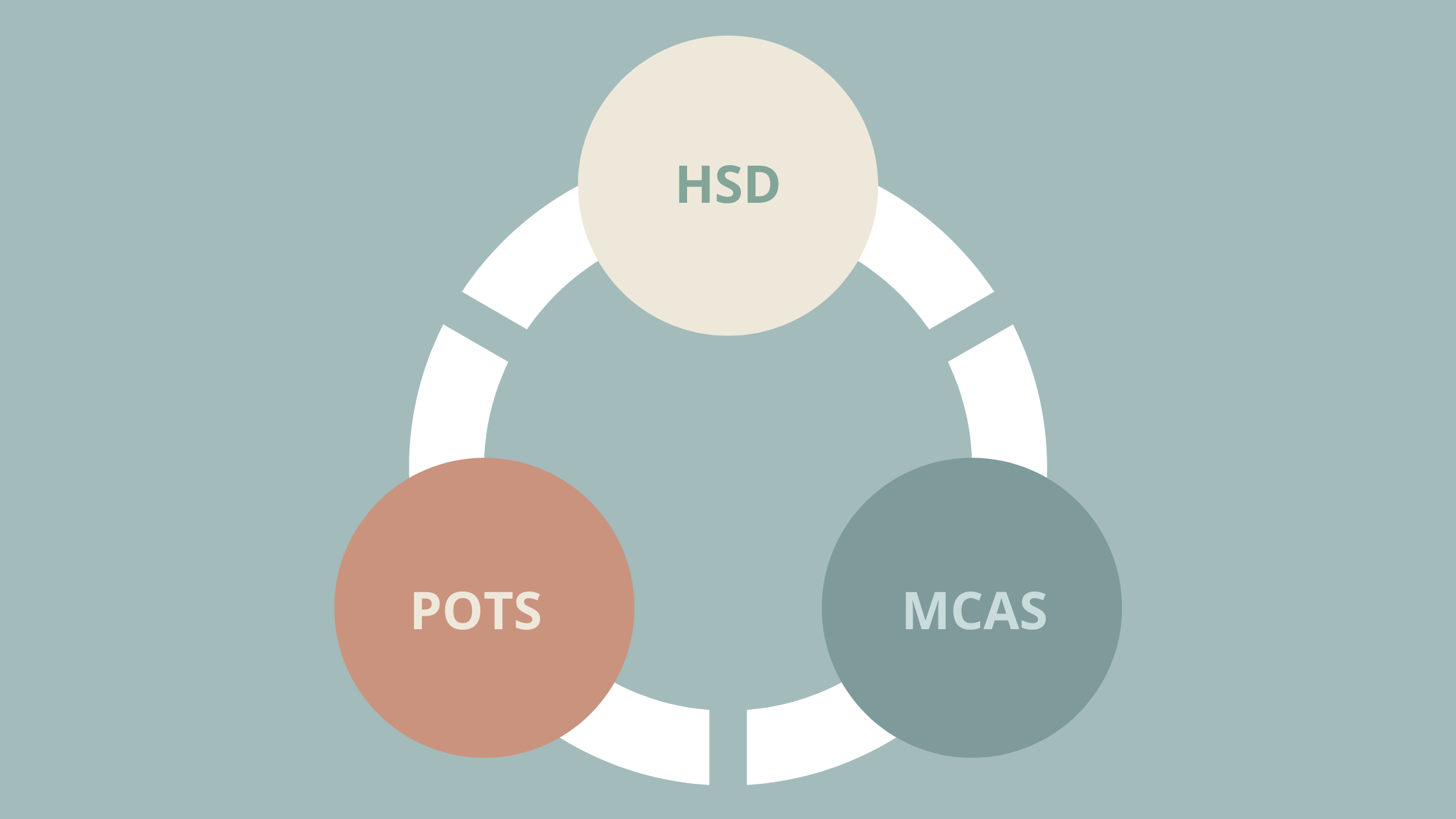
Three conditions in particular are worth knowing about: Hypermobility Spectrum Disorder (HSD), Mast Cell Activation Syndrome (MCAS), and Postural Orthostatic Tachycardia Syndrome (POTS). Research shows these three often present together as a triad, and their combined symptom picture looks strikingly similar to fibromyalgia.¹ Understanding the differences matters, because the treatment approach for each is distinct.

What Fibromyalgia Actually Is
Fibromyalgia is characterized by chronic widespread musculoskeletal pain, severe fatigue, sleep disturbance, cognitive complaints, gastrointestinal issues, headaches, anxiety, and depression.¹ It affects an estimated 2 to 6 percent of the US population and is diagnosed using criteria that include a Widespread Pain Index score, a Symptom Severity Score, and the presence of symptoms for at least three months.¹
For years, fibromyalgia was understood primarily as a central sensitization condition, meaning the central nervous system becomes hypersensitive and amplifies pain signals across multiple systems. More recently, research has pointed toward neurogenic inflammation as a contributing mechanism, where pain-sensing neurons release inflammatory mediators at the tissue level, creating a feedback loop of inflammation and pain.¹
The challenge is that this symptom picture overlaps extensively with HSD, MCAS, and POTS. In fact, research suggests that between 47 and 65 percent of patients with fibromyalgia also demonstrate HSD, and some researchers have proposed that HSD is frequently misdiagnosed as fibromyalgia altogether.¹
Hypermobility Spectrum Disorder: The Most Common Missed Diagnosis
HSD is a heritable connective tissue disorder affecting collagen throughout the body. It is now recognized as the most common heritable connective tissue disorder, potentially affecting up to 10 percent of the US population, with women affected two to eight times more often than men after puberty.¹
The symptoms extend well beyond flexible joints. Patients with HSD commonly experience chronic joint pain, frequent sprains and subluxations, migratory pain, fatigue, brain fog, headaches, gastrointestinal complaints, sleep disturbance, and anxiety, all of which appear on the fibromyalgia symptom checklist as well.¹
What distinguishes HSD from pure fibromyalgia is the presence of persistent structural tissue problems. Pain in HSD is not only driven by central sensitization but by ongoing mechanical stress on fragile connective tissue. Muscles overwork chronically to compensate for lax joints, trigger points develop, and minor physical stressors that would not register for most people cause real tissue damage.¹ Telling a hypermobile patient to push through pain, a common approach in chronic pain management, causes more tissue damage rather than building tolerance.¹
HSD symptoms can be triggered or worsened by musculoskeletal trauma, overuse, or periods of forced rest such as surgery, illness, or injury.¹ This pattern is clinically important: a patient who develops widespread pain after a viral illness, a procedure, or a period of bed rest may not have developed fibromyalgia. They may have unmasked underlying hypermobility.
MCAS: When Inflammation Is the Dominant Feature
Mast Cell Activation Syndrome involves overactive mast cells, part of the body's immune and inflammatory response, that release mediators triggering widespread inflammatory reactions across multiple organ systems.¹ MCAS is common in conditions associated with central sensitization, including fibromyalgia, chronic fatigue, irritable bowel, pelvic pain, and migraine.¹
Symptoms include flushing, hives, itching, chemical and food sensitivities, gastrointestinal disturbance, fatigue, brain fog, migratory pain, and an excessive inflammatory response to everyday triggers like temperature changes, stress, certain foods, and some medications.¹ The symptom overlap with fibromyalgia is substantial, and MCAS remains underrecognized and underdiagnosed in the United States.¹
Key triggers for MCAS include rapid temperature changes, ultraviolet radiation, histamine-rich foods, mechanical irritation, alcohol, opioids, and NSAIDs, which means some medications commonly prescribed for fibromyalgia pain may actually worsen the underlying inflammatory picture in a patient with MCAS.¹
POTS: When the Autonomic Nervous System Is the Problem
Postural Orthostatic Tachycardia Syndrome is a form of dysautonomia in which the body's autonomic response to position change is dysregulated. When moving from lying down to standing, the heart rate increases by 30 beats per minute or more, triggering a cascade of symptoms: racing heart, lightheadedness, anxiety, brain fog, syncope or near-fainting, and profound fatigue.¹
POTS affects women five times more often than men and most commonly presents during adolescence and childbearing years.¹ It is frequently triggered by a period of forced rest, such as a serious illness, surgery, pregnancy, or injury, and the resulting deconditioning compounds the autonomic dysfunction.¹
The symptom overlap with fibromyalgia is again extensive: fatigue, sleep disturbance, cognitive complaints, anxiety, exercise intolerance, and widespread pain all appear in both conditions.¹ A patient who cannot exercise upright, crashes after minimal activity, and experiences anxiety and brain fog may have been told they have fibromyalgia when POTS is the primary driver.
Why This Triad Matters Clinically
MCAS, POTS, and HSD frequently occur together, and each contributes differently to the overall symptom load.¹ MCAS is primarily an inflammatory presentation. POTS is primarily autonomic. HSD leads to mechanical stress on fragile connective tissue.¹ Identifying which of these is present, alone or in combination, changes how treatment is approached and which providers need to be involved.
Addressing these conditions does not necessarily cure fibromyalgia if it is also present. But managing them reduces the overall inflammatory state, neural sensitization, and symptom burden that makes fibromyalgia so difficult to treat.¹
Where Well Co. Fits
At Well Co, Dr. Sandy specializes in soft tissue work and rehabilitation, and has personal experience with connective tissue disorders in her own body and family. That shapes how she assesses and work with patients who come in with complex, multisystem pain pictures.
Dr. Sandy’s role is not to diagnose fibromyalgia, HSD, MCAS, or POTS. Formal diagnosis belongs with knowledgeable physicians, including rheumatologists, autonomic specialists, and immunologists depending on the presentation. But once a patient has a clearer picture of what is driving their symptoms, the musculoskeletal and soft tissue piece is where I can make a meaningful difference.
For patients with HSD or hypermobility-driven pain, Dr. Sandy use Active Release Technique to address the muscular restrictions and compensatory patterns that develop around chronically unstable joints. Graston Technique helps treat fibrotic and poorly organized connective tissue. StemWave therapy promotes cellular repair and blood flow in tissue that sits in a degenerative holding pattern. Rehabilitation built around proprioception, motor control, and careful progressive loading addresses the underlying instability that drives so much of the pain.
The approach is careful and deliberate. Hypermobile tissue requires a different protocol than standard connective tissue. We start low, progress slowly, and prioritize movement quality over intensity.
If This Sounds Like Your Story
If you've had a fibromyalgia diagnosis that has never quite sat right, or symptoms that don't fully respond to standard treatment, it may be worth exploring whether HSD, MCAS, or POTS is part of your picture.
Well Co Chiropractic is at 3982 Bee Ridge Road in Sarasota. We work with complex patients who deserve a provider that takes the time to understand what's actually going on.
Footnotes
¹ Russek LN. Is It Really Fibromyalgia? Recognizing Mast Cell Activation, Orthostatic Tachycardia, and Hypermobility. Orthopaedic Practice. 2018;30(3):187-193.