Why Your Heel Hurts on the Court: Plantar Fasciitis vs Achilles Tendinopathy in Sarasota Tennis and Pickleball Players
Heel pain is one of the most common complaints we see in active patients at Well Co, and it's especially prevalent in the Sarasota tennis and pickleball community. The courts demand a lot from your feet: explosive lateral movement, hard stops, repeated push-off from the baseline. Over time, that load concentrates in the heel, and when something gives, it gives hard.
The two injuries that show up most often are plantar fasciitis and Achilles tendinopathy or tendinosis. They're both heel pain, they're both stubborn, and they're both frequently mismanaged with rest alone. But they're different problems, and the way you treat them matters.
Here's how to tell them apart, and what we do about both.
Plantar Fasciitis
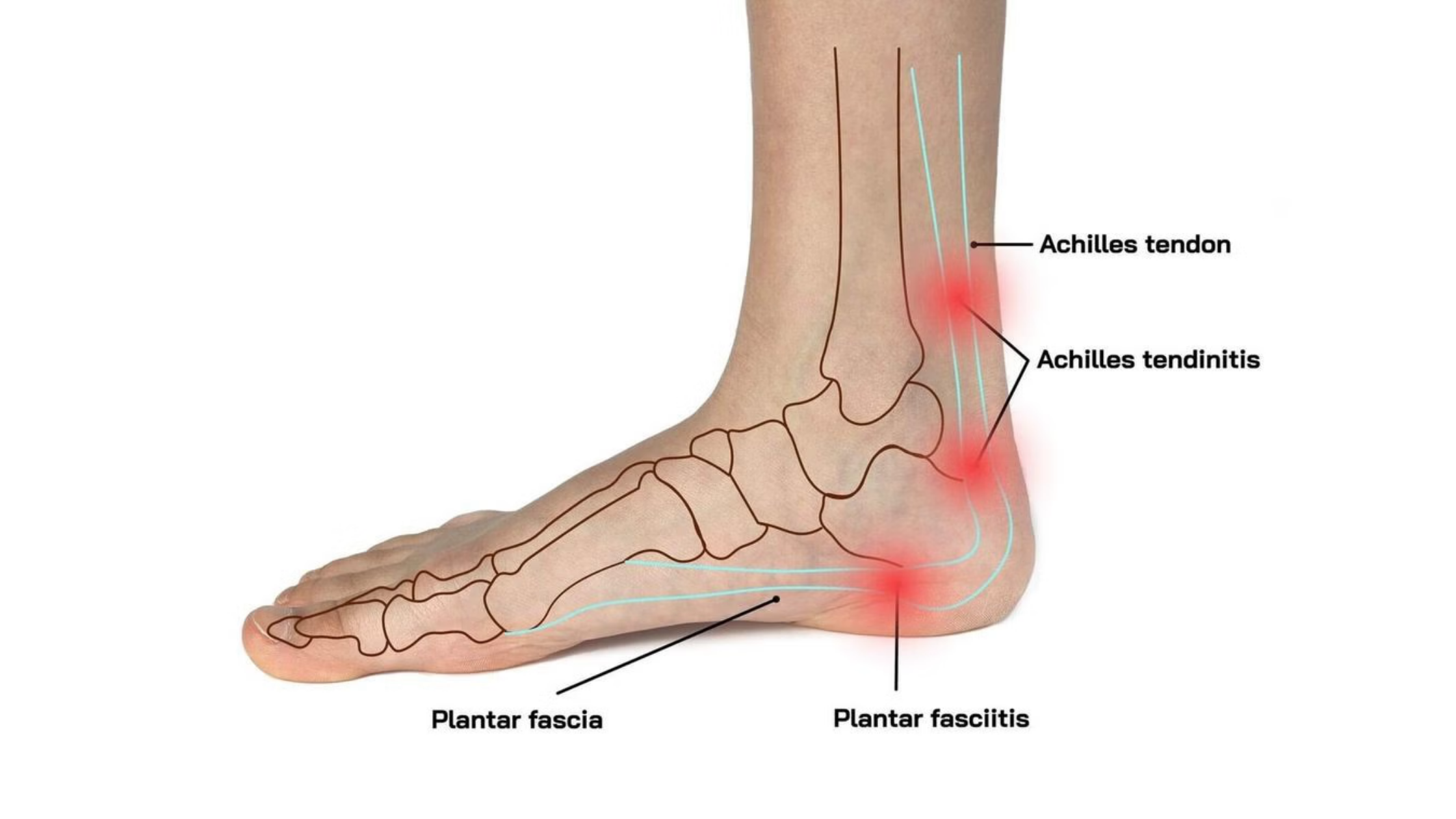
The plantar fascia is a thick band of connective tissue that runs along the bottom of your foot, connecting your heel bone to the base of your toes. Its job is to support the arch and absorb load with every step.
Plantar fasciitis develops when that tissue is repeatedly overloaded, leading to microtearing and a chronic inflammatory response at the heel attachment. In court sport athletes it tends to come on gradually, often peaking after a long tournament weekend or a spike in training volume.
What it feels like: Sharp, stabbing pain at the bottom of the heel, worst with the first steps in the morning or after sitting for a while. It often eases up once you're moving but returns after prolonged activity. Some players describe it as stepping on a stone every morning.
Orthopedic test, the Windlass Test: With your foot flat, the clinician passively extends your big toe upward. This loads the plantar fascia by tightening it through the windlass mechanism. Reproduction of heel pain with this movement is a strong clinical indicator of plantar fasciitis. You can also try this yourself: standing at the edge of a step, let your heel drop below the level of the step. Sharp pain at the heel attachment points toward the plantar fascia.
Achilles Tendinopathy
The Achilles tendon connects your calf muscles to your heel bone and is the largest tendon in the body. It handles enormous load, particularly during the push-off phase of running and the explosive acceleration common in pickleball and tennis.
Achilles tendinopathy is a degenerative condition, meaning the tendon tissue breaks down faster than it can remodel. It's not purely inflammatory, which is one reason anti-inflammatories alone rarely fix it. The tendon becomes thickened, painful, and loses its ability to handle load efficiently.
What it feels like: Pain and stiffness at the back of the heel or just above it, often worst in the morning and after long bouts of activity. There's frequently a visible or palpable thickening of the tendon. Some players notice a dull ache that builds during a match rather than easing with warmup.
Orthopedic test: A useful test is the Thompson Test, where the calf is squeezed with the patient lying face down. Absence of foot movement indicates a potential Achilles rupture and warrants immediate imaging. If the foot moves normally but pain is reproduced, tendinopathy is the more likely picture.
Why Both Injuries Stall Without the Right Treatment
Both plantar fasciitis and Achilles tendinopathy involve tissue that is poorly vascularized and chronically overloaded. Rest quiets the pain temporarily but doesn't address the underlying tissue quality. Return to sport reloads the same compromised tissue, and the cycle continues.
The key is restoring blood flow, breaking up the restrictive tissue patterns that develop around the injury, and progressively loading the tendon or fascia back to full capacity.
How We Treat It at Well Co
We use a combination of four approaches depending on what the tissue needs.
Active Release Technique (ART) targets the calf complex, plantar fascia, and surrounding soft tissue. Restrictions in the gastrocnemius, soleus, and intrinsic foot muscles directly increase load at the heel. ART uses precise tension combined with active movement to release those restrictions, restore tissue mobility, and reduce the mechanical pull on the heel attachment.
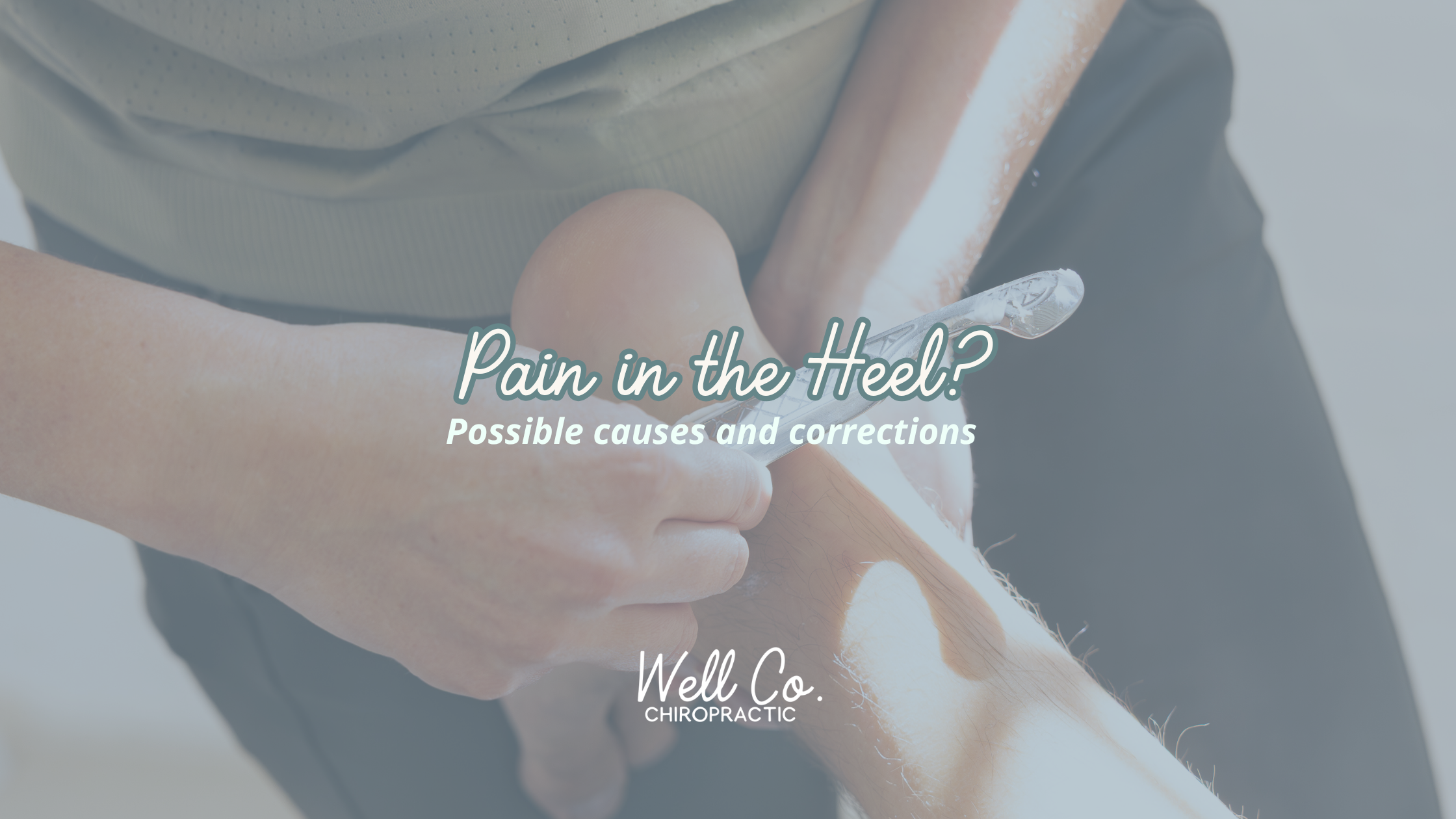
Graston Technique uses stainless steel instruments to detect and treat fibrotic tissue and adhesions within the plantar fascia and Achilles tendon. The controlled microtrauma introduced by Graston stimulates a fresh healing response, breaking the degenerative cycle and prompting the body to lay down healthier collagen.
StemWave therapy delivers acoustic sound waves to the injured tissue, triggering angiogenesis, the formation of new blood vessels, and activating the cellular repair processes that chronic tendon and fascial injuries need to actually heal. It also reduces the inflammatory cytokines keeping the tissue in a degenerative state. For both plantar fasciitis and Achilles tendinopathy, StemWave addresses the biological environment that rest alone cannot fix.
Targeted rehab ties it all together. As the tissue responds, we load it progressively to rebuild tensile strength and prepare it for the demands of court sport.
3 Exercises to Try at Home
These won't replace treatment for a true tendinopathy or fascial injury, but they're a good starting point while you figure out next steps.
1. Calf Raises on a Step
Stand with the balls of your feet on a step edge, heels hanging off. Lower slowly over 3 seconds, rise back up. 3 sets of 15. This eccentrically loads the Achilles and is one of the most evidence-supported exercises for tendinopathy.
2. Plantar Fascia Stretch
Before your first steps in the morning, sit at the edge of your bed and cross one foot over your knee. Pull your toes back toward your shin until you feel a stretch along the bottom of your foot. Hold 30 seconds, repeat 3 times each side.
3. Towel Toe Scrunches
Place a small towel flat on the floor. Use your toes to scrunch and drag it toward you. 3 sets of 20 reps. This strengthens the intrinsic foot muscles that support the arch and reduce load at the heel.
When to Come In
If your heel pain has been present for more than two to three weeks, is affecting your game, or keeps returning after rest, it's time to get it assessed properly. The orthopedic tests above can point you in a direction, but a hands-on exam tells a more complete story.
Well Co Chiropractic is located at 3982 Bee Ridge Road in Sarasota. We work with active patients who want to stay on the court, not just manage pain from the sideline.