StemWave Shockwave Therapy for Plantar Fasciitis: How It Works
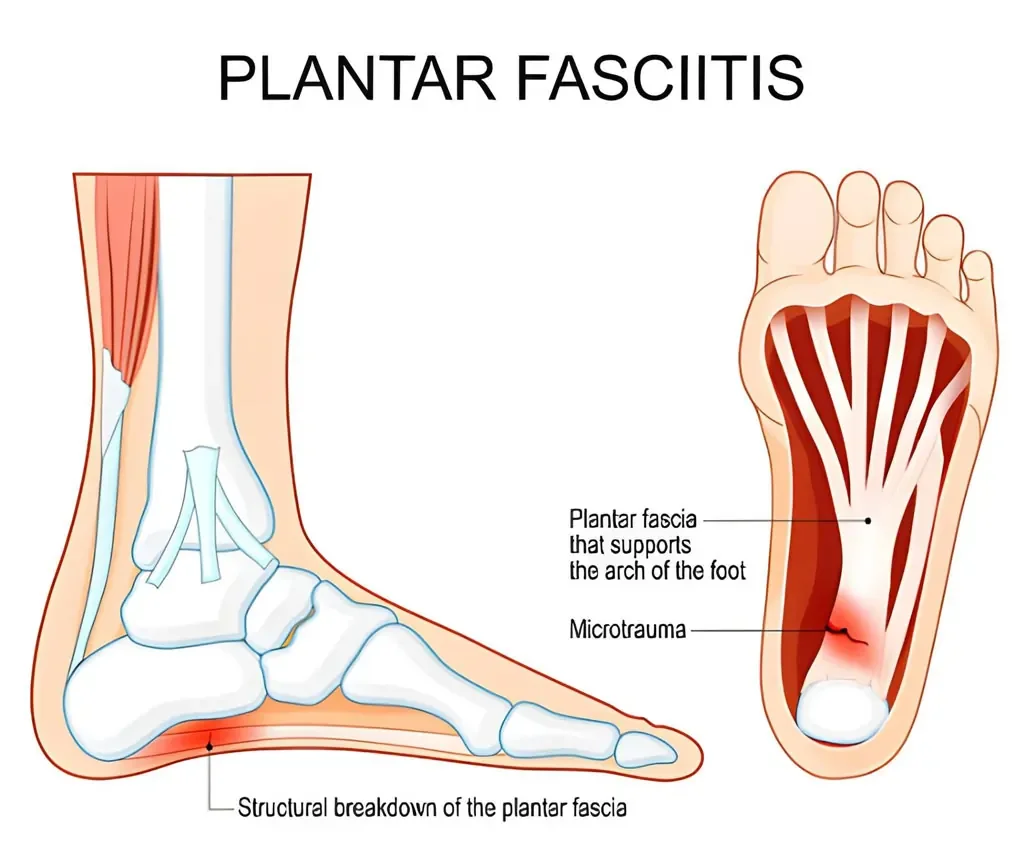
Plantar fasciitis that hasn't improved after months of stretching, icing, and rest is one of the most common reasons patients ask us about StemWave shockwave therapy.
It's one of the better-evidenced applications we offer for this specific condition, so it's worth explaining exactly how it works and who it's actually a good fit for.
What shockwave therapy actually does
StemWave delivers acoustic pulses through the skin into the plantar fascia. Those pulses create two effects at the tissue level: direct mechanical force and cavitation, meaning the rapid formation and collapse of tiny bubbles in the fluid within the tissue. Both effects trigger a biological response called mechanotransduction, where mechanical energy gets converted into the biochemical signals that drive tissue repair.
Two things happen as a result.
The treatment stimulates new blood vessel formation at the site, which matters because the plantar fascia has relatively poor blood supply to begin with, part of why it heals so slowly on its own.
It also reduces substance P, a neuropeptide involved in transmitting pain signals, and produces a longer-lasting desensitizing effect on the nerve fibers carrying that pain.
That combination is why shockwave tends to produce pain relief that holds up well beyond the treatment session itself, rather than just numbing the area temporarily.
Who's actually a good candidate
Shockwave produces its best results in chronic plantar fasciitis, generally symptoms present for more than three months, that hasn't responded adequately to stretching, orthotics, or other baseline conservative care. It's not usually the first thing we reach for on a new, mild case. It tends to be the right call once the fascia has had a fair chance to calm down with more basic measures and hasn't.
What treatment actually looks like
Most patients do a series of sessions, commonly four to six, sometimes more for longstanding or more severe cases, spaced roughly a week apart. Each shockwave session runs about 20 minutes. Some mild discomfort during treatment is normal and expected, more of a deep, dull ache than sharp pain. Results build over the weeks following your sessions rather than showing up immediately, since the therapy triggers a biological healing process rather than producing an instant mechanical fix.
What it isn't a substitute for
Shockwave addresses the fascia itself, but plantar fasciitis rarely has a single cause. The tibialis posterior, tibialis anterior, and peroneus longus all share the job of supporting your arch, and if one of them isn't doing its share, the fascia ends up overloaded again even after a successful round of shockwave. The best results come from pairing StemWave with addressing those muscular and structural contributors, not from shockwave carrying the whole treatment on its own.
Safety notes
Shockwave isn't right for everyone. It's not recommended during pregnancy, for anyone on blood thinners or with a bleeding disorder, over an active infection, or for patients with a pacemaker.
How we use it at Well Co.
StemWave is typically one piece of a broader plantar fasciitis approach here, alongside Active Release Technique and Graston for tissue quality in the surrounding muscles, chiropractic adjustment for foot and ankle joint mobility, and a home program addressing the muscular contributors specifically. It fits into either visit type, as the modality in an Elevated Treatment (30 minutes, 2 to 3 regions) for more localized cases, or as part of a Total Body Reset (60 minutes, 3 to 4 regions) when more of the surrounding chain needs attention in the same visit.
Book an appointment, or book a consult call, or see current pricing and package options at wellcochiropractic.com/prices.